Smart Autopilot Integration
Adaptive, hydrodynamic-aware steering systems that learn the sea state to optimize comfort and efficiency.
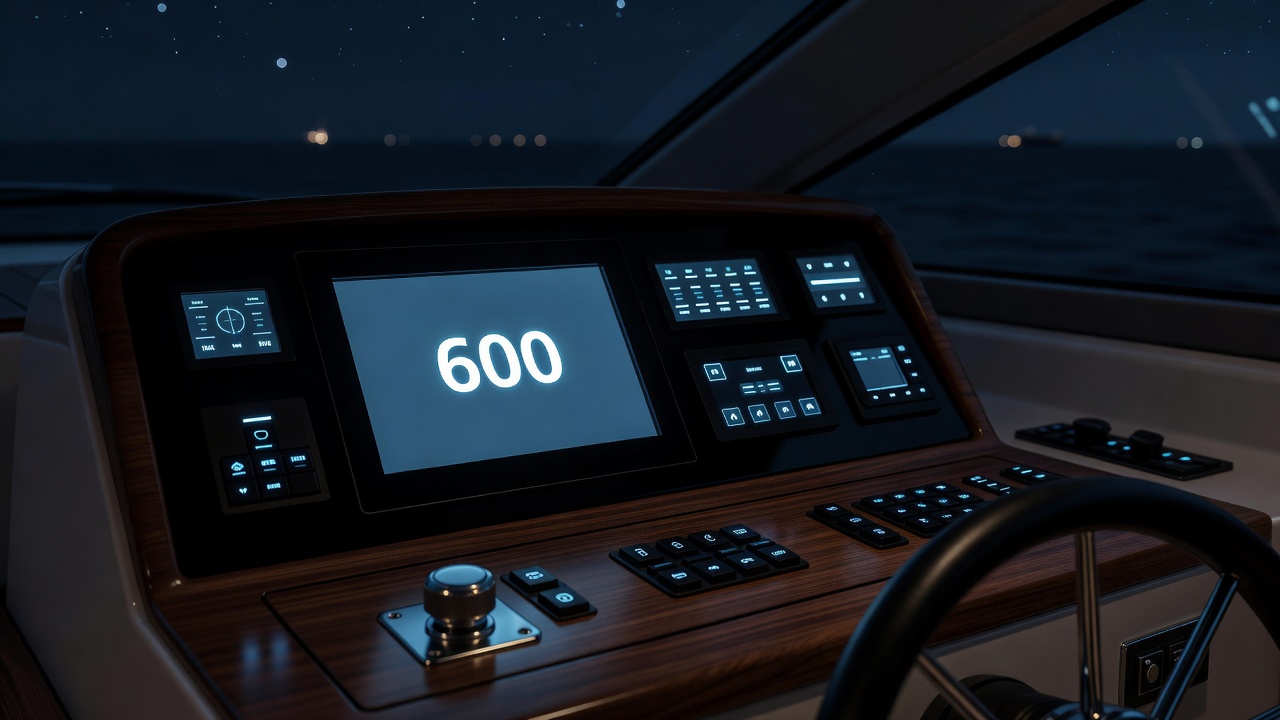
The standard marine autopilot has remained functionally similar for decades: a fluxgate compass senses a deviation from a set heading, and an algorithm applies rudder angle to correct it. While adequate in flat water, this reactive model struggles in complex offshore environments. When struck by a quartering sea, a standard autopilot waits for the vessel to be pushed off course before brutally throwing the rudder over to compensate. This creates an uncomfortable ride, dramatically slows the vessel, and places immense strain on the steering quadrant and hydraulic actuators.
Smart autopilot integration represents a leap forward by shifting the steering paradigm from reactive correction to predictive fluid dynamics. Utilizing advanced gyroscopes, accelerometers, and AI learning algorithms, these systems anticipate hull movement before the compass heading is significantly altered.
The Sensor Suite of a Smart Autopilot
To steer with human-like intuition, an AI autopilot requires a massive influx of precise data:
- 9-Axis Inertial Measurement Units (IMUs): These sensors measure pitch, roll, and yaw thousands of times per second. By analyzing the frequency and amplitude of the roll, the AI accurately maps the real-time wave period and height.
- Rudder Feedback Integration: High-resolution sensors that monitor exact rudder position, allowing the AI to calculate hydrodynamic drag created by steering inputs.
- Wind and Speed Data: Cross-referencing Apparent Wind Angle (AWA) and Speed Over Ground (SOG) via the NMEA 2000 network to understand how weather forces are impacting the hull's trajectory.
Adaptive Learning Algorithms
The defining feature of a smart autopilot is its ability to learn. When first commissioned, the system behaves conservatively. However, over the first few hours of a voyage, the machine learning algorithms build a hydrodynamic profile of the yacht in the current sea state.
If the system detects a rhythmic, repeating wave pattern striking the port quarter every eight seconds, it stops reacting to each individual wave. Instead, it predicts the stern's slide and applies a micro-correction of rudder angle a fraction of a second *before* the wave impacts. The result is a yacht that tracks straight as an arrow, with minimal rudder deflection, preserving speed and drastically improving passenger comfort.
Comparing Autopilot Generations
| Feature | Standard Autopilot (PID Controller) | Smart AI Autopilot |
|---|---|---|
| Steering Logic | Reactive. Corrects after compass heading deviates. | Predictive. Anticipates movement via IMU sensors. |
| Sea State Handling | Requires manual adjustment of 'Response' or 'Gain' settings. | Dynamically and autonomously adjusts to changing wave patterns. |
| Power Consumption | High. Constant, large rudder movements drain battery banks. | Optimized. Micro-movements reduce electrical and hydraulic loads. |
Pros and Cons of Smart Integration
The Advantages
The immediate advantage of an AI autopilot is a profound increase in vessel efficiency. Drag caused by excessive rudder movement is a primary thief of speed and fuel. By smoothing out the steering curve, voyages are completed faster and with less energy expenditure. Additionally, the reduction in mechanical cycling vastly extends the lifespan of steering cables, hydraulic rams, and autopilot pumps. In heavy weather, a smart autopilot is arguably safer than a human helmsman, as it never suffers from fatigue, distraction, or vertigo.
The Limitations
The primary drawback is system complexity and the requirement for robust calibration. A smart autopilot is heavily reliant on the integrity of the NMEA 2000 data network. If the rate-compass fails, or the IMU comes loose from its mounting bracket, the system will receive conflicting data, leading to erratic steering behavior. Furthermore, the installation process is highly specialized. Unlike older systems that require a simple dockside swing of the compass, a smart autopilot requires a rigorous sea-trial calibration to allow the AI to build its initial hull dynamic models.