Energy Efficient Sailing
Intelligent orchestration of hybrid propulsion, regeneration, and hotel loads to maximize range and sustainability.
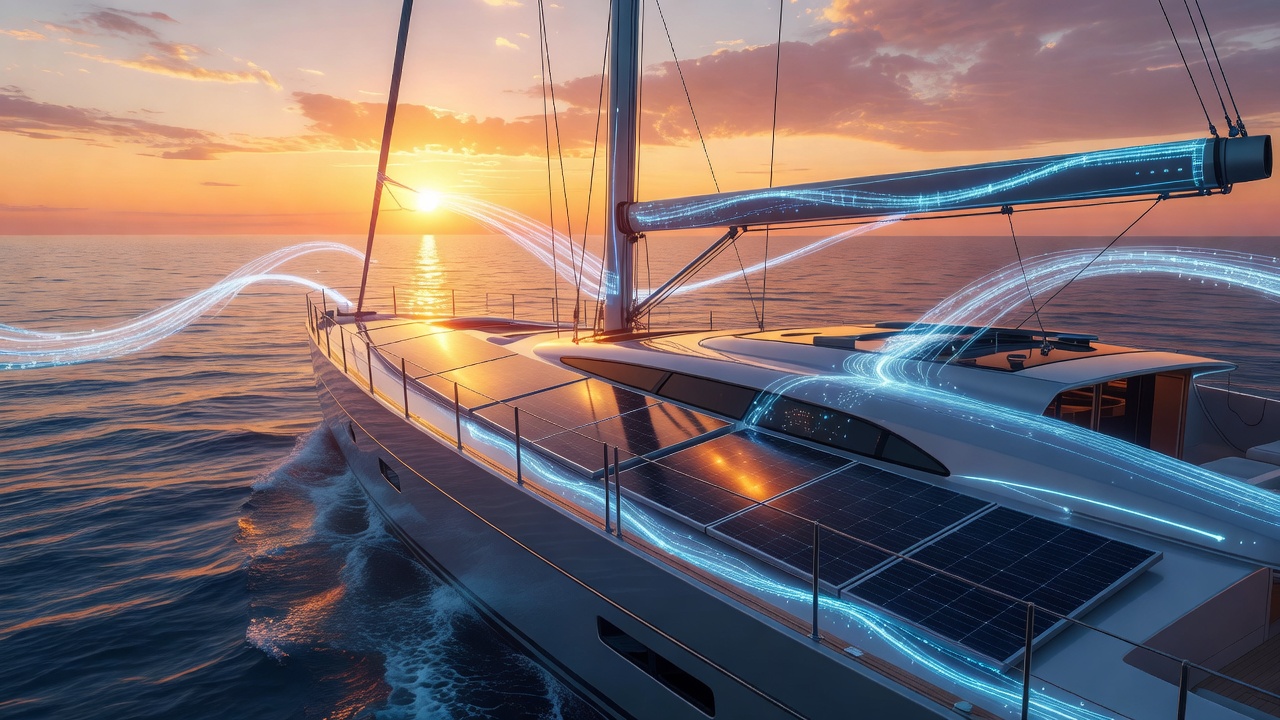
Modern luxury yachts are increasingly power-hungry. The demand for air conditioning, watermakers, advanced electronics, and stabilization systems creates massive electrical loads. Historically, meeting these demands required running diesel generators continuously, producing noise, vibration, and significant carbon emissions. The transition to hybrid-electric propulsion and massive lithium-ion battery banks has provided a greener alternative, but managing these complex power grids requires more than simple voltage regulators.
AI-driven energy management systems act as a virtual Chief Engineer. By continuously monitoring the vessel's energy production, storage state, and consumption trends, the AI intelligently balances loads to ensure zero wasted energy, pushing the yacht closer to true autonomous sustainability.
The Pillars of Smart Energy Management
A vessel's microgrid is a dynamic ecosystem. The AI oversees several critical subsystems to maintain balance:
- Propulsion Optimization: In hybrid diesel-electric setups, the AI calculates the exact crossover point where it is more efficient to run on electric motors versus firing up the internal combustion engines, factoring in current battery state of charge (SOC) and the distance to the next waypoint.
- Hydro and Solar Regeneration: The system monitors incoming solar yield. If solar input is high, the AI might delay the engagement of hydro-generators (freewheeling the propellers to create electricity), thereby reducing drag and increasing sailing speed.
- Predictive Hotel Load Management: The AI learns the habits of the crew and guests. If the system knows that galley ovens and air conditioning loads typically peak at 19:00, it ensures the battery banks are prioritized for charging during peak afternoon solar hours to handle the evening spike without starting a generator.
Manual vs. AI Power Management
| System Task | Traditional Management | AI Energy Management |
|---|---|---|
| Generator Operations | Crew manually starts the generator when voltage drops below a certain threshold. | AI automatically schedules generator runs during optimal thermal efficiency windows, or eliminates runs entirely via load shedding. |
| Load Shedding | Breakers trip if the system is overloaded, causing blackouts. | AI seamlessly dials back non-essential loads (like water heaters) to prioritize critical systems (like navigation). |
| Regeneration | Fixed pitch regeneration creating constant drag. | Variable pitch adjustment managed by AI to balance desired speed with required charging amps. |
Pros and Cons of Complex Microgrids
The Advantages
The primary benefit is extended autonomy. Yachts equipped with AI energy management can often operate for days or even weeks at anchor without starting a combustion engine, dramatically improving the quality of life onboard (no exhaust fumes, no generator hum). Underway, the system maximizes range by squeezing every possible mile out of a liter of diesel through precise RPM optimization. Furthermore, by strictly managing charge and discharge curves, the AI significantly extends the lifespan of expensive lithium battery banks, preventing damaging deep discharges or thermal events.
The Limitations
The transition to AI-managed hybrid systems introduces a high level of technical complexity. If the central control module fails, diagnosing and bypassing the system underway can be exceedingly difficult for a standard marine mechanic. Redundancy is critical; vessels must maintain manual override switches for essential propulsion and navigation circuits. Additionally, the initial capital expenditure for outfitting a yacht with heavy-duty lithium banks, variable-pitch hydro-generators, and the associated AI control modules is substantial, often requiring years of fuel savings to offset.
The Path to Zero Emissions
As battery energy density improves and solar technology becomes more efficient, the role of AI in energy management will transition from extending diesel range to enabling entirely zero-emission voyages. By flawlessly orchestrating natural energy harvesting and precise power distribution, AI is the keystone technology making sustainable, long-distance ocean crossings a reality.